High-Polyphenol Olive Oil: The Complete Guide to Choosing a Truly High-Quality EVOO
If you’re searching for high-polyphenol olive oil, you’ve probably noticed that almost every extra virgin olive oil claims to be healthy, premium, or rich in antioxidants.
But those words don’t tell you what’s actually inside the bottle.
Two oils can both be labeled extra virgin olive oil while differing substantially in freshness, olive variety, harvest timing, processing, storage, and — importantly — their concentration of naturally occurring phenolic compounds.
So how do you identify a genuinely high-polyphenol extra virgin olive oil?
The answer is simple:
Don’t rely only on the marketing. Look for the evidence.
In this guide, we’ll explain what olive oil polyphenols are, why compounds such as oleocanthal and hydroxytyrosol are being studied, what a polyphenol number actually tells you, and what to look for when buying high-polyphenol olive oil online.
What Are Polyphenols in Olive Oil?
Polyphenols are naturally occurring compounds found in olives and extra virgin olive oil.
Among the compounds commonly discussed in olive-oil research are:
- Oleocanthal
- Oleacein
- Hydroxytyrosol
- Tyrosol
- Oleuropein derivatives
These compounds are also associated with some of the sensory characteristics of fresh, high-quality extra virgin olive oil.
That bitterness you taste?
The peppery sensation at the back of your throat?
The little cough that an intense olive oil can sometimes trigger?
Those aren’t necessarily defects.
Bitterness and pungency are recognized characteristics of high-quality extra virgin olive oil.
What Does “High-Polyphenol Olive Oil” Actually Mean?
This is where consumers need to be careful.
In the United States, you may see terms such as:
High polyphenol
Phenolic-rich
Antioxidant-rich
Ultra-high polyphenol
But the most useful question isn’t what is printed in large letters on the front of the bottle.
It’s:
What did the laboratory actually measure?
Polyphenol concentrations are often reported in mg/kg — milligrams per kilogram of olive oil.
However, analytical methods can differ, so numbers from different laboratories or testing methods aren’t always directly comparable.
That’s why transparency matters.
If a producer makes a specific claim about unusually high polyphenol content, look for an actual laboratory analysis rather than relying solely on advertising language.
The European Union Has an Authorized Olive Oil Polyphenol Health Claim
One of the most useful regulatory reference points comes from the European Union.
European Commission Regulation (EU) No. 432/2012 authorizes the following claim for qualifying olive oils:
“Olive oil polyphenols contribute to the protection of blood lipids from oxidative stress.”
The regulation specifies that the claim may be used only for olive oil containing at least 5 mg of hydroxytyrosol and its derivatives per 20 grams of olive oil, and consumers must be informed that the beneficial effect is obtained with a daily intake of 20 grams.
Read European Commission Regulation (EU) No. 432/2012
This is particularly useful because it establishes a measurable condition rather than simply using vague language about antioxidants.
Oleocanthal: One of Olive Oil’s Most Fascinating Phenolic Compounds
Oleocanthal is one of the best-known phenolic compounds associated with extra virgin olive oil.
It is strongly associated with the distinctive pungent sensation that some fresh EVOOs create at the back of the throat.
Oleocanthal has also attracted scientific interest.
For example, researchers at UC Davis conducted a randomized controlled crossover study investigating EVOOs with different phenolic profiles.
Nine healthy men consumed 40 mL of different EVOOs, and researchers observed differences in platelet aggregation after consumption that were associated with the oils’ phenolic composition, including oleocanthal.
This was a small, acute study, so it should not be interpreted as proof that olive oil treats cardiovascular disease. But it is an excellent example of why scientists are interested not only in the total amount of polyphenols in EVOO but also in which individual phenolic compounds are present.
Read the human oleocanthal study
View the registered clinical trial
Hydroxytyrosol
Another important olive-derived phenolic compound is hydroxytyrosol.
Hydroxytyrosol and its derivatives are especially noteworthy because they form the basis of the European Union’s authorized olive-oil-polyphenol health claim discussed above.
Researchers continue to study the absorption, metabolism, and biological activity of hydroxytyrosol and other olive phenolics.
Review research on the metabolism and bioavailability of olive phenolic compounds
It is important, however, to distinguish scientific research from claims that a food can prevent, treat, or cure disease.
Extra virgin olive oil is food — not medicine.
Why Do Some Olive Oils Have Much Higher Polyphenol Levels?
Polyphenol concentration doesn’t happen by accident.
It can be influenced by numerous factors, beginning with the olive itself and continuing through harvesting, milling, filtration, storage, bottling and transportation.
1. Olive Variety
Different olive cultivars naturally produce different phenolic profiles.
This means the olive variety itself can have an important influence on the final oil.
At BYRSA, for example, we produce multiple varieties, including Picholine, Chetoui and Arbozana, each with its own characteristics.
2. Harvest Timing
Olive maturity can influence both flavor and chemistry.
Producers seeking intensely flavored, phenolic-rich oils may harvest while olives are relatively green rather than waiting for maximum maturity and oil yield.
This can involve a significant economic tradeoff:
less oil from the fruit in exchange for the characteristics the producer is trying to preserve.
3. Fruit Condition
Exceptional olive oil begins with exceptional fruit.
Damaged or deteriorating olives can negatively affect oil quality.
That is why careful harvesting and minimizing unnecessary damage to the fruit matters.
4. Time Between Harvest and Milling
Once an olive is picked, handling becomes extremely important.
Fresh olives are perishable agricultural products.
Reducing unnecessary delays between harvest and processing helps protect fruit quality.
At BYRSA, our olives are handpicked and pressed within hours of harvesting.
5. Extraction
What happens inside the mill matters too.
Time, temperature, oxygen exposure and other processing decisions can influence the finished oil.
Producing exceptional EVOO therefore requires control throughout the process — not simply growing good olives.
6. Filtration, Storage and Transportation
Quality preservation doesn’t stop after extraction.
Oil still has to be filtered or otherwise properly handled, stored, bottled and transported.
Heat, light and oxygen are major enemies of olive-oil quality.
That’s why consumers should care not only about where an olive oil was produced but also what happened to it afterward.
When Buying Olive Oil, Look for the Harvest Date
One of the most useful pieces of information on an olive-oil bottle is the harvest date.
Why?
Because olive oil doesn’t improve indefinitely with age.
Freshness matters.
Instead of relying only on a “best by” date, determine when the olives were actually harvested.
When you’re spending premium prices for EVOO, ask:
What harvest am I actually buying?
How to Buy High-Polyphenol Olive Oil Online
Before buying an expensive high-polyphenol EVOO, use this checklist.
1. Look for the actual polyphenol measurement.
Don’t stop at “rich in antioxidants.”
Look for a specific measurement and find out how it was determined.
2. Look for independent laboratory analysis.
If the producer makes precise claims about phenolic content, look for documentation supporting those claims.
3. Make sure the analysis corresponds to the current harvest.
Olive oil is an agricultural product.
The chemistry can change from harvest to harvest.
A test from years ago shouldn’t automatically be treated as proof of what’s in today’s bottle.
4. Look beyond total polyphenols.
When available, examine individual compounds such as:
Oleocanthal
Oleacein
Hydroxytyrosol
Tyrosol
The phenolic profile can provide considerably more information than a marketing phrase.
5. Check the harvest date.
Fresher is generally what you want.
6. Find out where the olives were grown and processed.
“Bottled in” doesn’t necessarily tell you where the olives originated.
Traceability matters.
7. Learn how the oil was handled.
Ask how quickly the olives were processed and how the finished oil was stored and transported.
8. Look at the packaging.
Protecting olive oil from unnecessary light, oxygen and heat helps preserve the quality producers worked to create.
A Real-World Example: BYRSA Olive Oil
Now let’s put those principles into practice.
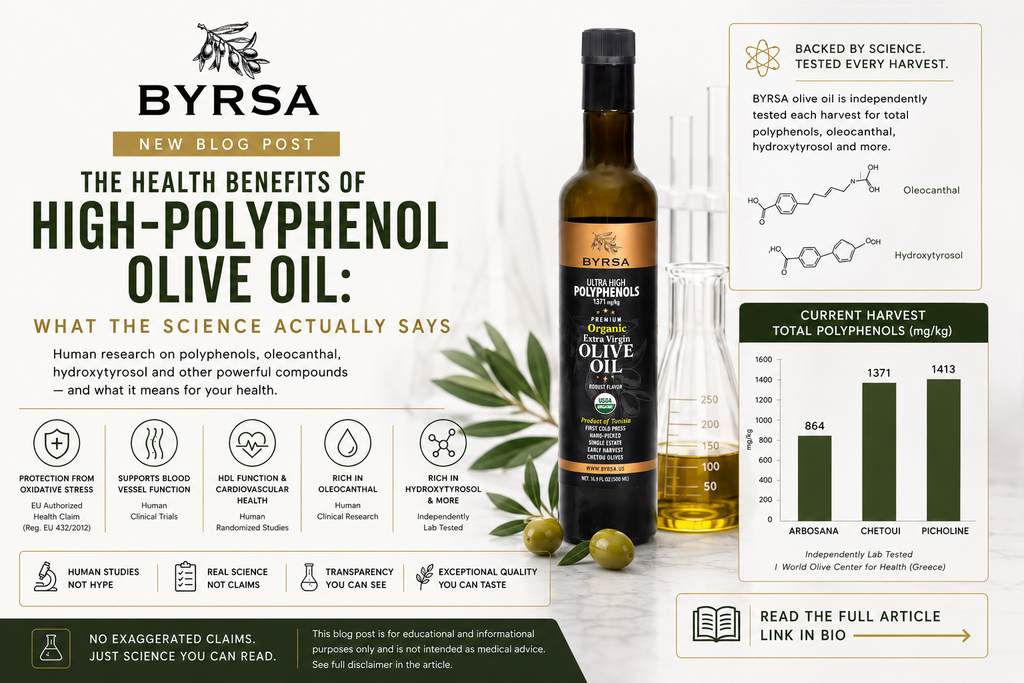
At BYRSA Olive Oil, our current laboratory-tested oils include:
BYRSA Picholine
1,413 mg/kg total polyphenols
BYRSA Chetoui
1,371 mg/kg total polyphenols
A previous BYRSA Picholine harvest reached:
2,071 mg/kg total polyphenols
including approximately:
857 mg/kg oleocanthal
We don’t assume that one year’s results will automatically repeat themselves.
We test.
Why BYRSA Tests Every Harvest
Olive oil is an agricultural product.
Growing conditions change.
Rainfall changes.
Temperature changes.
Fruit maturity changes.
Harvest conditions change.
So the composition of the oil can change too.
That’s why BYRSA tests every harvest through the World Olive Center for Health.
We wait for the analysis and use the measured results from that harvest.
We believe consumers shopping specifically for high-polyphenol olive oil deserve to know what is actually in the bottle they’re purchasing.
View BYRSA’s laboratory analysis certificate
From Our Farm in Tunisia to the United States
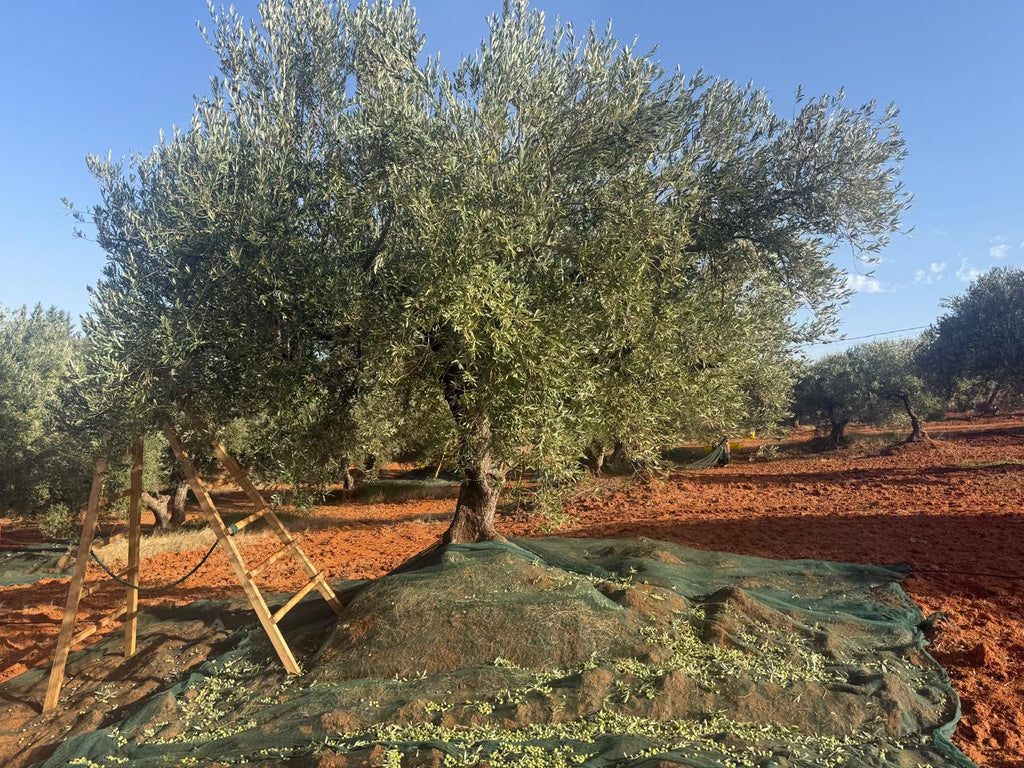
Our process begins on our certified-organic farm in Tunisia.
The olives are carefully handpicked.
They’re pressed within hours.
The oil is filtered.
It’s bottled at the farm.
And then we face another challenge that doesn’t receive enough attention:
Transportation.
After spending an entire year growing olives and carefully producing the oil, we don’t want the final product sitting unnecessarily in prolonged international transportation.
That’s why we transport BYRSA from Tunisia to the United States by air cargo, arriving in approximately 24 hours rather than spending weeks crossing the ocean by conventional sea freight.
Air freight costs us considerably more.
We do it because protecting the oil doesn’t stop when it leaves the farm.
Why Does High-Polyphenol Olive Oil Taste So Strong?
If you’re accustomed to mild supermarket olive oil, a fresh, early-harvest, high-polyphenol EVOO can be surprising.
You may experience:
Bitterness
Pepperiness
Green or grassy aromas
A strong sensation at the back of your throat
Sometimes even a brief cough
That intensity isn’t necessarily something to avoid.
For many olive-oil enthusiasts, it’s exactly what they’re looking for.
Can You Cook With High-Polyphenol Extra Virgin Olive Oil?
Yes.
Extra virgin olive oil isn’t limited to salads or dipping bread.
It can be used for cooking as well as finishing.
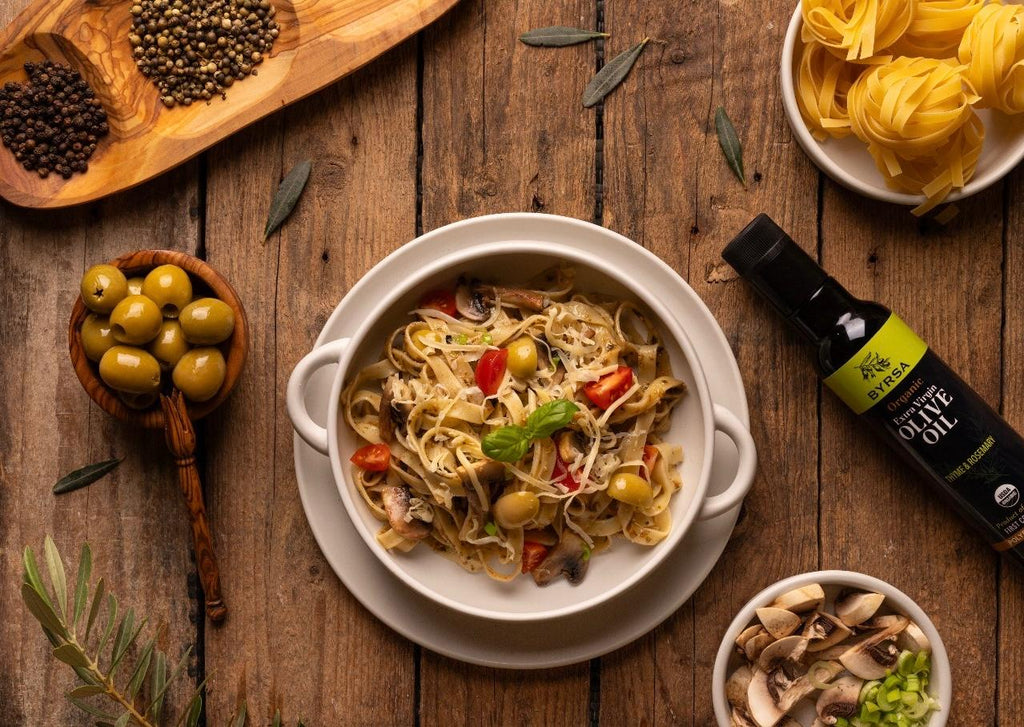
If you’ve purchased an especially intense premium oil, however, you may particularly enjoy it where its flavor can shine:
- Fresh vegetables
- Salads
- Beans and lentils
- Grilled fish
- Hummus
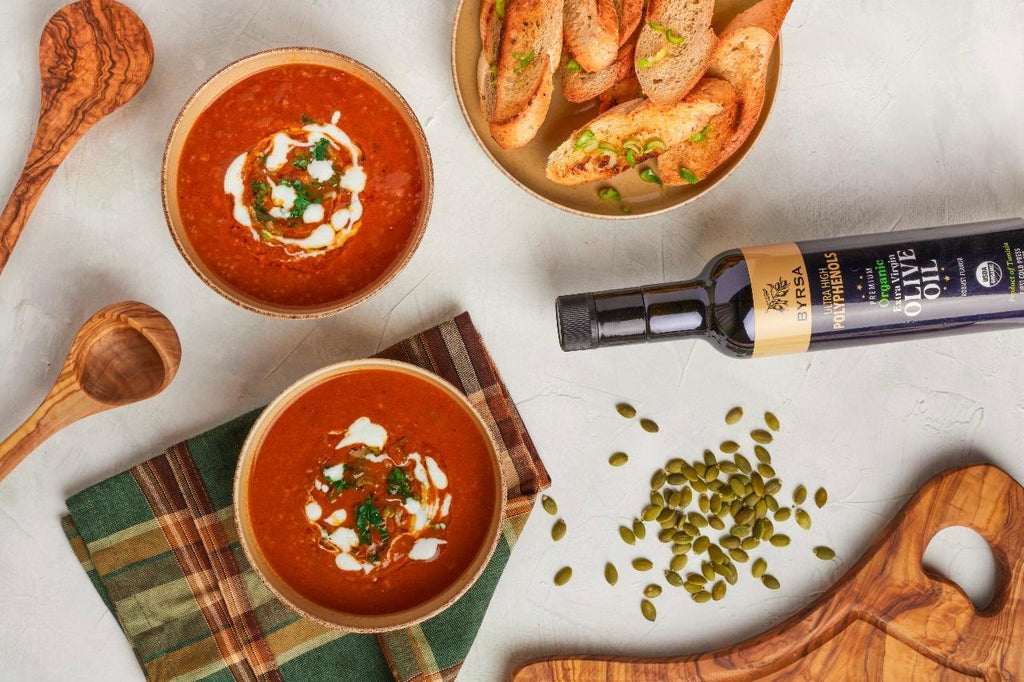
- Soups
- Tomatoes
- Bread
- Roasted vegetables
- As a finishing oil
And some people simply enjoy tasting a small amount directly to experience the oil’s aroma, bitterness and pungency.
How Should High-Polyphenol Olive Oil Be Stored?
Remember three things:
Heat. Light. Oxygen.
Keep your olive oil:
- Away from the stove
- Away from direct sunlight
- Properly closed
- In a cool, dark location
And once you’ve opened a bottle, enjoy it.
Don’t treat premium EVOO like a bottle of wine that improves as it sits for years.
Is the Olive Oil With the Highest Polyphenol Number Automatically the Best?
No.
This is important.
Polyphenol concentration is one measurement of an olive oil.
It doesn’t replace freshness, sensory quality, authenticity, proper production, storage, or taste.
And consumers have different preferences.
Some people love intensely bitter, peppery early-harvest oils.
Others prefer something more delicate.
So don’t chase one number in isolation.
Instead, look for:
Freshness + traceability + careful production + independent testing + transparency.
The Bottom Line
If you remember one thing from this guide, make it this:
Don’t just buy the marketing. Look for the evidence.
When a company tells you its olive oil is extraordinarily high in polyphenols, ask questions.
What is the actual laboratory measurement?
Who performed the analysis?
Which harvest was tested?
Can I see the analysis?
When were the olives harvested?
Where were they grown?
How quickly were they processed?
How was the finished oil stored and transported?
A producer making extraordinary claims should be comfortable providing extraordinary transparency.
At BYRSA Olive Oil, that’s the standard we try to follow:
Harvest carefully. Press quickly. Protect the oil. Test every harvest. Publish the results. Let the analysis speak for itself.
Because when you’re buying truly exceptional extra virgin olive oil, transparency shouldn’t be an extra.
It should be expected.
Explore BYRSA High-Polyphenol Olive Oils
Want to Go Deeper Into the Science?
We’ve also put together a detailed article specifically examining polyphenols, oleocanthal, hydroxytyrosol and the scientific research behind them.
Read: Why Polyphenols Matter — The Science Behind BYRSA High-Polyphenol Olive Oil
Related post
28
Aug
28
Aug
17
Mar