The Health Benefits of High-Polyphenol Olive Oil: What the Science Actually Says
Extra virgin olive oil has been at the heart of the Mediterranean diet for thousands of years. Today, modern science is helping us understand why this ancient food has attracted so much attention.
But there is something important consumers should know:
Not all extra virgin olive oils are chemically the same.
Beyond its monounsaturated fat, high-quality extra virgin olive oil contains naturally occurring compounds called polyphenols.
Among the most studied are oleocanthal, oleacein, hydroxytyrosol, tyrosol, and oleuropein derivatives.
Scientists have investigated these compounds in human clinical trials examining oxidative stress, cardiovascular markers, blood-vessel function, HDL function, platelet activity, and inflammatory biomarkers.
At BYRSA Olive Oil, we believe these subjects deserve something better than exaggerated health claims.
They deserve evidence.
So let’s look at what human research actually tells us about high-polyphenol extra virgin olive oil.
What Are Olive Oil Polyphenols?
Polyphenols are naturally occurring plant compounds.
Extra virgin olive oil can contain a complex mixture of them, including:
• Oleocanthal
• Oleacein
• Hydroxytyrosol
• Tyrosol
• Oleuropein derivatives
These compounds also contribute to some of the sensory characteristics associated with fresh extra virgin olive oil.
That bitterness you taste?
The peppery sensation at the back of your throat?
The occasional little cough after swallowing an especially intense EVOO?
Those characteristics can be associated with the natural phenolic compounds present in the oil.
But polyphenol concentrations can vary dramatically.
Olive variety, climate, fruit maturity, harvest timing, processing, heat, oxygen exposure, storage, transportation, and age can all influence the finished oil.
That’s why simply seeing “extra virgin olive oil” on a label doesn’t tell you how many polyphenols are actually inside the bottle.
1. Polyphenols and Protection From Oxidative Stress
This is one of the most important places to begin because there is an officially authorized European health claim for olive-oil polyphenols.
European Commission Regulation (EU) No. 432/2012 authorizes the following statement for qualifying olive oils:
“Olive oil polyphenols contribute to the protection of blood lipids from oxidative stress.”
There is an important condition.
The claim applies to olive oil containing at least 5 mg of hydroxytyrosol and its derivatives per 20 grams of olive oil, and consumers must be informed that the beneficial effect is obtained with a daily intake of 20 grams of olive oil.
Official European Commission source:
https://eur-lex.europa.eu/eli/reg/2012/432/oj/eng
Why is that important?
Because this isn’t simply a company saying its product is “packed with antioxidants.”
It is a defined regulatory health claim with a measurable condition for its use.
2. High-Polyphenol Olive Oil and Blood-Vessel Function
One particularly interesting area of human research involves the endothelium.
The endothelium is the thin layer of cells lining the inside of our blood vessels, and endothelial function is an important measure in cardiovascular research.
In a randomized, controlled, double-blind crossover trial, researchers studied 20 adults at risk for type 2 diabetes because of prediabetes or metabolic syndrome.
Participants consumed a single 50 mL dose of either:
• High-polyphenol extra virgin olive oil
or
• Refined olive oil without polyphenols.
Researchers measured endothelial function before consumption and again two hours afterward.
The high-polyphenol EVOO produced a significantly better acute endothelial-function response than the refined olive oil.
This was a small, short-term study, so it should not be interpreted as evidence that EVOO treats or prevents diabetes or cardiovascular disease.
But it provides interesting human evidence suggesting that the naturally occurring phenolic compounds in extra virgin olive oil may matter.
Read the human clinical trial:
https://pubmed.ncbi.nlm.nih.gov/33548380/
3. What About Blood Pressure?
Another randomized crossover study examined 24 young women with high-normal blood pressure or stage 1 hypertension.
Participants followed diets containing either polyphenol-rich olive oil or polyphenol-free olive oil.
The polyphenol-rich olive-oil intervention was associated with reductions in systolic and diastolic blood pressure compared with baseline, along with changes in several measures related to endothelial function, oxidative stress, and inflammation.
Again, this was a relatively small study in a specific population.
It doesn’t mean high-polyphenol olive oil should be used to treat hypertension or replace prescribed medication.
It does, however, help explain why olive-oil phenolics continue to receive attention in cardiovascular research.
Read the study:
https://pubmed.ncbi.nlm.nih.gov/22914255/
4. High-Polyphenol Olive Oil and HDL Function
Most people have heard HDL described as “good cholesterol.”
But scientists increasingly recognize that the way HDL functions may also be important.
Researchers have therefore investigated whether olive-oil polyphenols affect HDL characteristics and function.
Human randomized trials comparing polyphenol-rich and polyphenol-poor olive oils have reported changes in several measures related to HDL functionality following consumption of phenolic-rich olive oil.
That research is particularly interesting because it suggests that scientists shouldn’t necessarily look only at the fat composition of olive oil.
The smaller compounds naturally present in high-quality EVOO may matter too.
Read the human study:
https://pubmed.ncbi.nlm.nih.gov/25060792/
5. Oleocanthal: The Compound Behind the Famous Throat Sting
One of the most fascinating compounds in extra virgin olive oil is oleocanthal.
If you’ve ever swallowed an intensely fresh EVOO and experienced a sharp peppery sensation at the back of your throat—or even coughed—you may already be familiar with one of the sensory characteristics associated with oleocanthal.
Researchers conducted a randomized human study involving oleocanthal-rich olive oil.
Nine healthy men consumed 40 mL of different EVOOs on separate occasions.
Importantly, researchers selected oils with similar total phenolic content but different phenolic profiles.
That allowed them to investigate whether the particular phenolic composition of an olive oil could influence the biological response.
Researchers observed acute reductions in collagen-stimulated platelet aggregation after consumption of certain oleocanthal-containing oils, with the response correlating with oleocanthal intake.
This was only nine participants and examined an acute response.
Therefore, it would be inappropriate to claim that oleocanthal prevents heart attacks or that olive oil works like a pharmaceutical medication.
But it demonstrates why oleocanthal continues to be an especially interesting subject of olive-oil research.
Read the human oleocanthal study:
https://pubmed.ncbi.nlm.nih.gov/29904393/
6. Hydroxytyrosol
Another important olive-derived phenolic compound is hydroxytyrosol.
Hydroxytyrosol and its derivatives are especially noteworthy because they are central to the European Union’s authorized olive-oil-polyphenol health claim.
As mentioned earlier, qualifying olive oil must contain at least 5 mg of hydroxytyrosol and its derivatives per 20 grams of olive oil to use that claim under the regulation.
Scientists continue to investigate hydroxytyrosol’s absorption, metabolism, bioavailability, and biological activity.
As with oleocanthal, however, it’s important to distinguish scientific research from claims that a food diagnoses, treats, cures, or prevents disease.
7. What About Inflammation?
You’ll frequently see extra virgin olive oil described online as “anti-inflammatory.”
The science deserves more careful language.
Researchers have investigated how olive-oil phenolics interact with biological pathways and biomarkers associated with inflammation.
Some human studies have reported favorable changes in certain inflammatory biomarkers after polyphenol-rich olive-oil interventions.
But individual studies vary in design, population, duration, dose, and outcome.
That’s why we prefer to say:
Researchers are studying the effects of olive-oil polyphenols on inflammatory pathways and biomarkers.
That’s scientifically more responsible than claiming that olive oil “cures inflammation.”
8. Why Extra Virgin Matters
Extra virgin olive oil and refined olive oil aren’t chemically identical.
Extra virgin olive oil is obtained mechanically without the refining processes used to produce refined oils.
Those naturally occurring minor compounds—including phenolic compounds—are one reason scientists are interested in EVOO.
Several human clinical trials have specifically compared phenolic-rich extra virgin olive oil with refined or lower-polyphenol olive oils.
So when discussing the potential health properties of olive oil, it’s important to understand exactly what kind of olive oil was used in the research.
9. Why Freshness Matters
Exceptional olive oil doesn’t stay unchanged forever.
Olive oil is affected by:
• Heat
• Light
• Oxygen
• Time
That’s why producing a high-polyphenol olive oil is only part of the challenge.
You also have to protect it.
Harvest timing matters.
How quickly the olives reach the mill matters.
Processing matters.
Filtration and storage matter.
Packaging matters.
And transportation matters.
If you’re paying premium prices for EVOO, ask questions:
When were the olives harvested?
How quickly were they pressed?
Was this specific harvest independently tested?
Can I see the laboratory analysis?
How was the oil stored?
How was it transported?
10. How BYRSA Produces High-Polyphenol Olive Oil
At BYRSA Olive Oil, our goal isn’t simply to print the words “high polyphenol” on a bottle.
We want to know what’s actually inside it.
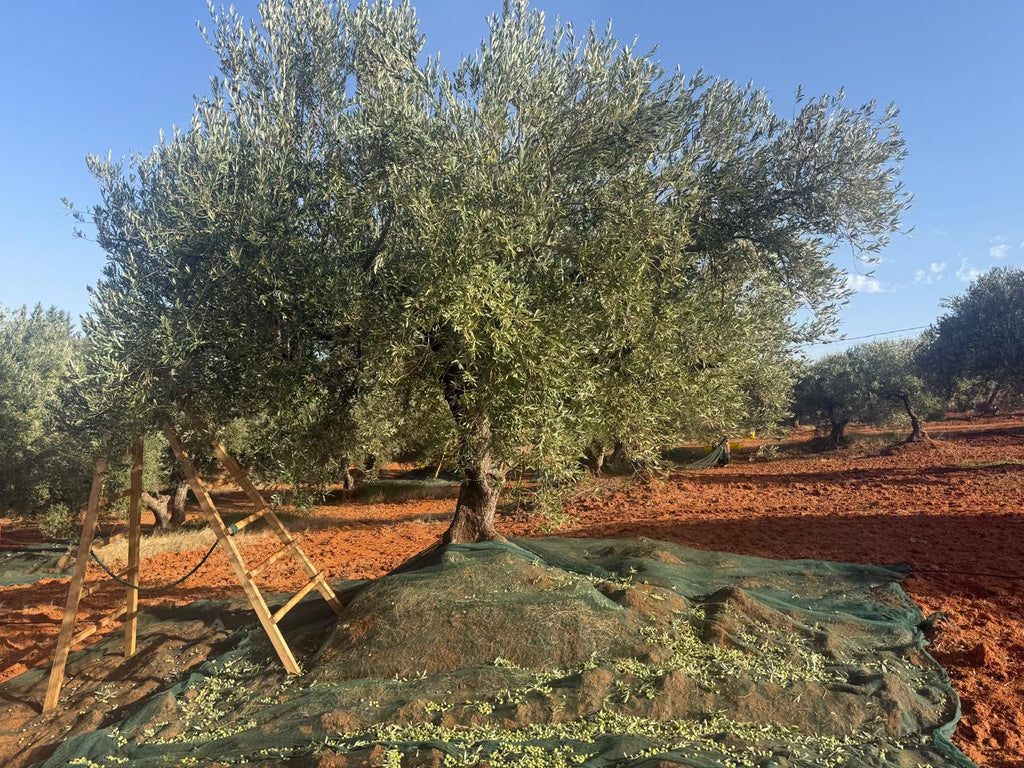
Our olives are grown on our organic farm in Tunisia.
They are carefully handpicked to minimize bruising and damage.
They’re pressed within hours of harvesting.
The oil is filtered and bottled with careful attention to limiting unnecessary oxidation and preserving freshness.
And then we do something we consider especially important:
We test every harvest.
Olive oil is an agricultural product.
Rainfall changes.
Temperature changes.
Fruit maturity changes.
Harvest conditions change.
The chemistry of the oil can change too.
That’s why we don’t assume that a laboratory result from a previous year represents the bottle we’re selling today.
We independently analyze each harvest and use the results from that harvest.
11. BYRSA’s Laboratory-Tested Polyphenol Levels
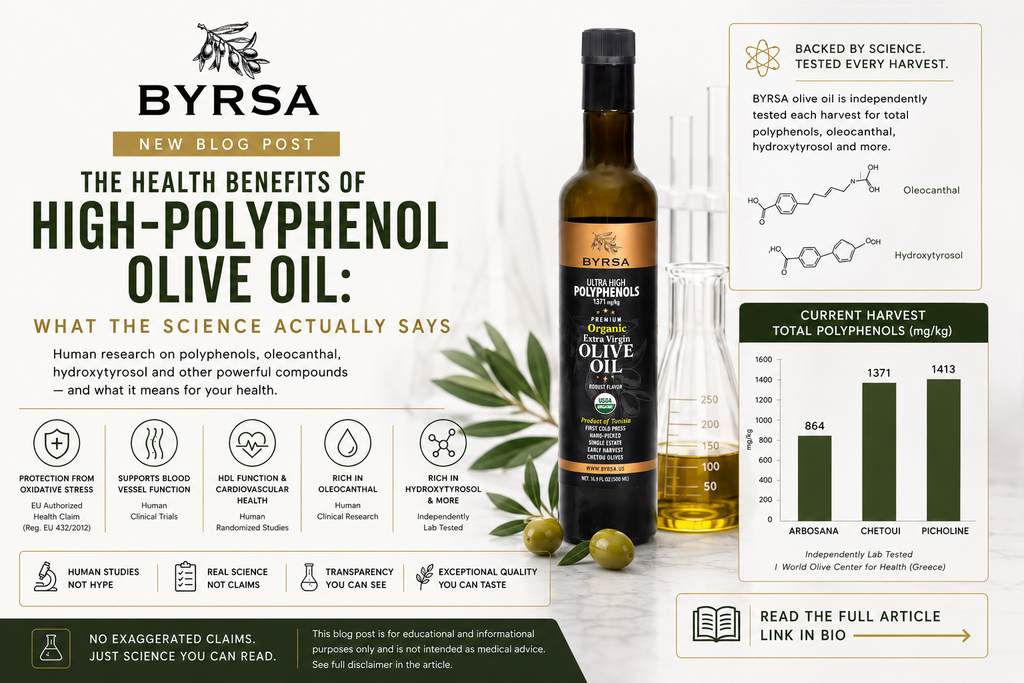
Our current harvest includes extraordinarily high measured concentrations of polyphenols.
BYRSA Picholine
1,413 mg/kg total polyphenols
BYRSA Chetoui
1,371 mg/kg total polyphenols
And a previous BYRSA Picholine harvest reached:
2,071 mg/kg total polyphenols
including approximately:
857 mg/kg oleocanthal
Those aren’t estimates.
They’re measurements from laboratory analysis.
And because agriculture changes from year to year, we believe the appropriate approach is simple:
Test again with every harvest.
12. Why BYRSA Uses Independent Laboratory Testing
Anybody can put impressive words on a label.
“Premium.”
“Healthy.”
“Antioxidant-rich.”
“High polyphenol.”
We prefer numbers.
BYRSA sends samples from each harvest for independent phenolic analysis through the World Olive Center for Health in Greece.
We receive the analysis before finalizing the information associated with that harvest.
For customers specifically seeking high-polyphenol EVOO, we believe that transparency matters.
You shouldn’t have to simply trust what a producer says.
Ask to see the analysis.
13. Protecting BYRSA From Tunisia to the United States
Our work doesn’t end when the oil is bottled.
Transportation is another part of quality control.
After spending an entire year growing the olives, harvesting carefully, pressing quickly, filtering, bottling, and testing the finished oil, we don’t want to unnecessarily expose it to prolonged international transportation.
That’s why we transport BYRSA from Tunisia to the United States using air cargo, with the goal of moving the oil here in approximately 24 hours.
Air transportation costs considerably more than conventional ocean freight.
We choose it because we believe protecting exceptional olive oil shouldn’t stop when it leaves the farm.
14. How Much Olive Oil Should You Consume?
There is no single amount of high-polyphenol olive oil that is medically appropriate for every person.
However, there is a useful regulatory reference point.
The European Union’s authorized polyphenol claim specifies that the beneficial effect is obtained with a daily intake of 20 grams of qualifying olive oil.
That should not be interpreted as personalized medical advice.
Individual dietary needs can vary considerably. Anyone with questions about their personal diet, medications, or medical conditions should consult a qualified healthcare professional.
15. Can You Cook With High-Polyphenol Extra Virgin Olive Oil?
Yes.
Extra virgin olive oil can be used both for cooking and as a finishing oil.
When you have an especially fresh, intense EVOO, using it in dishes where you can experience its aroma, bitterness, and pepperiness can be particularly enjoyable.
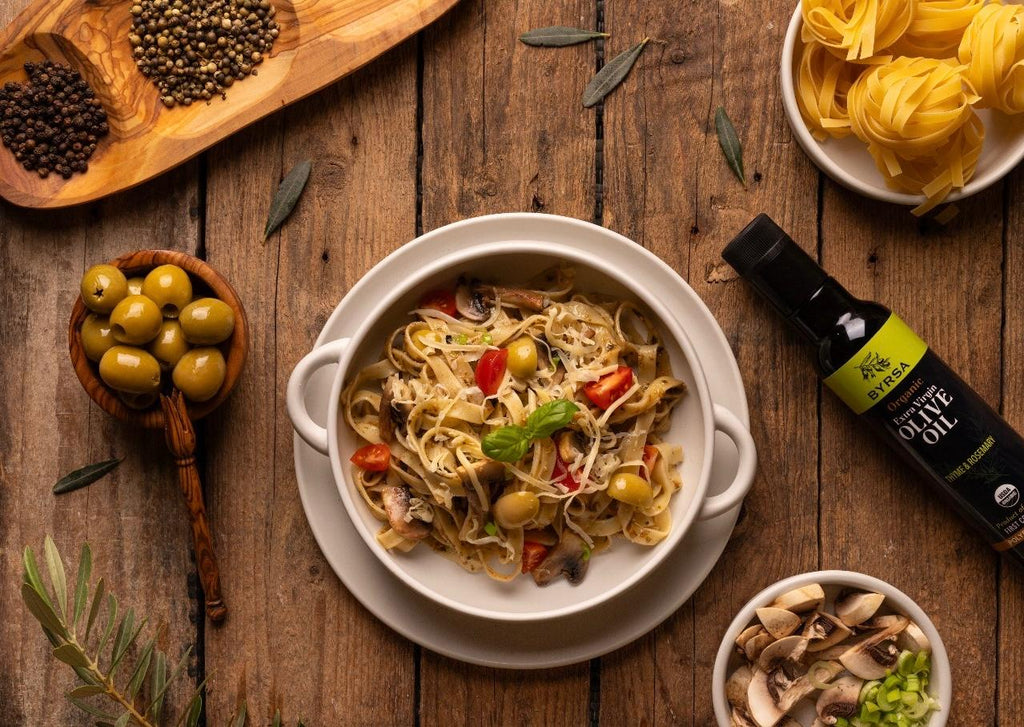
Try it with:
• Fresh vegetables
• Salads
• Beans and lentils
• Grilled fish
• Hummus
• Roasted vegetables
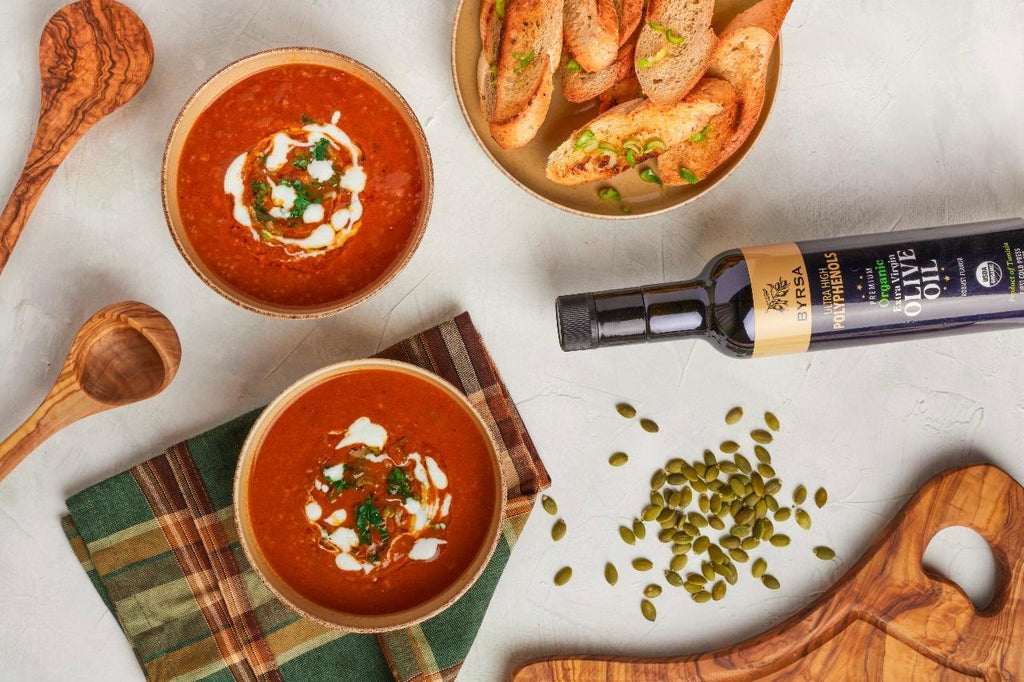
• Soups
• Tomatoes
• Fresh bread
• As a finishing oil
Some people also enjoy tasting a small amount directly to experience the aroma, bitterness, and characteristic pungency.
16. High-Polyphenol Olive Oil Is Still Food—Not Medicine
This is important.
The research surrounding extra virgin olive oil is fascinating.
But BYRSA Olive Oil is food.
It isn’t a medication.
Individual clinical trials shouldn’t be interpreted as proof that olive oil can prevent, diagnose, treat, or cure a disease.
Nutrition science develops through multiple studies conducted by different researchers, in different populations, over time.
Some findings are compelling.
Other questions remain unanswered.
That’s how legitimate science works.
We don’t believe the science surrounding EVOO needs to be exaggerated to be impressive.
The Bottom Line
The scientific interest surrounding extra virgin olive oil goes far beyond a single ingredient.
Human researchers have investigated olive-oil polyphenols in relation to oxidative stress, endothelial function, HDL function, platelet activity, blood pressure, inflammatory biomarkers, and other areas of cardiovascular and metabolic health.
The European Union has also authorized a specific health claim stating that qualifying olive-oil polyphenols contribute to the protection of blood lipids from oxidative stress.
But consumers should still be skeptical of exaggerated promises.
When shopping for high-polyphenol EVOO:
Look at the harvest.
Look at the laboratory analysis.
Look at the actual numbers.
Look at how the olives were handled.
Look at how quickly they were processed.
Look at how the finished oil was protected and transported.
And whenever someone makes an extraordinary health claim:
Look at the research.
At BYRSA, our philosophy is straightforward:
Harvest carefully. Press quickly. Protect the oil. Test every harvest. Publish the results. Let the evidence speak for itself.
Because transparency shouldn’t be an extra when buying premium extra virgin olive oil.
It should be expected.
Explore BYRSA High-Polyphenol Extra Virgin Olive Oils:
https://byrsa.us/collections/olive-collection
Read our Complete Guide to High-Polyphenol Olive Oil:
https://byrsa.us/blogs/news/high-polyphenol-olive-oil-the-complete-guide-to-choosing-a-truly-high-quality-evoo
Scientific References
European Commission — Authorized Health Claim for Olive Oil Polyphenols
https://eur-lex.europa.eu/eli/reg/2012/432/oj/eng
High-Polyphenol EVOO and Endothelial Function — Randomized Controlled Crossover Trial
https://pubmed.ncbi.nlm.nih.gov/33548380/
Polyphenol-Rich Olive Oil, Blood Pressure and Endothelial Function — Randomized Crossover Study
https://pubmed.ncbi.nlm.nih.gov/22914255/
Olive-Oil Polyphenols and HDL Function — Human Randomized Study
https://pubmed.ncbi.nlm.nih.gov/25060792/
Oleocanthal-Rich EVOO and Platelet Function — Randomized Human Trial
https://pubmed.ncbi.nlm.nih.gov/29904393/
Important Disclaimer
This article is provided for educational and informational purposes only and is not intended as medical advice or as a substitute for advice from a qualified healthcare professional. Statements regarding olive oil, polyphenols, oleocanthal, hydroxytyrosol, and other compounds are based on the scientific research cited and should not be interpreted as claims that BYRSA Olive Oil diagnoses, treats, cures, or prevents any disease. Individual health needs and circumstances vary. Consult a qualified healthcare professional regarding questions about your health, diet, medications, or medical conditions.
Related post
28
Aug
28
Aug
17
Mar